
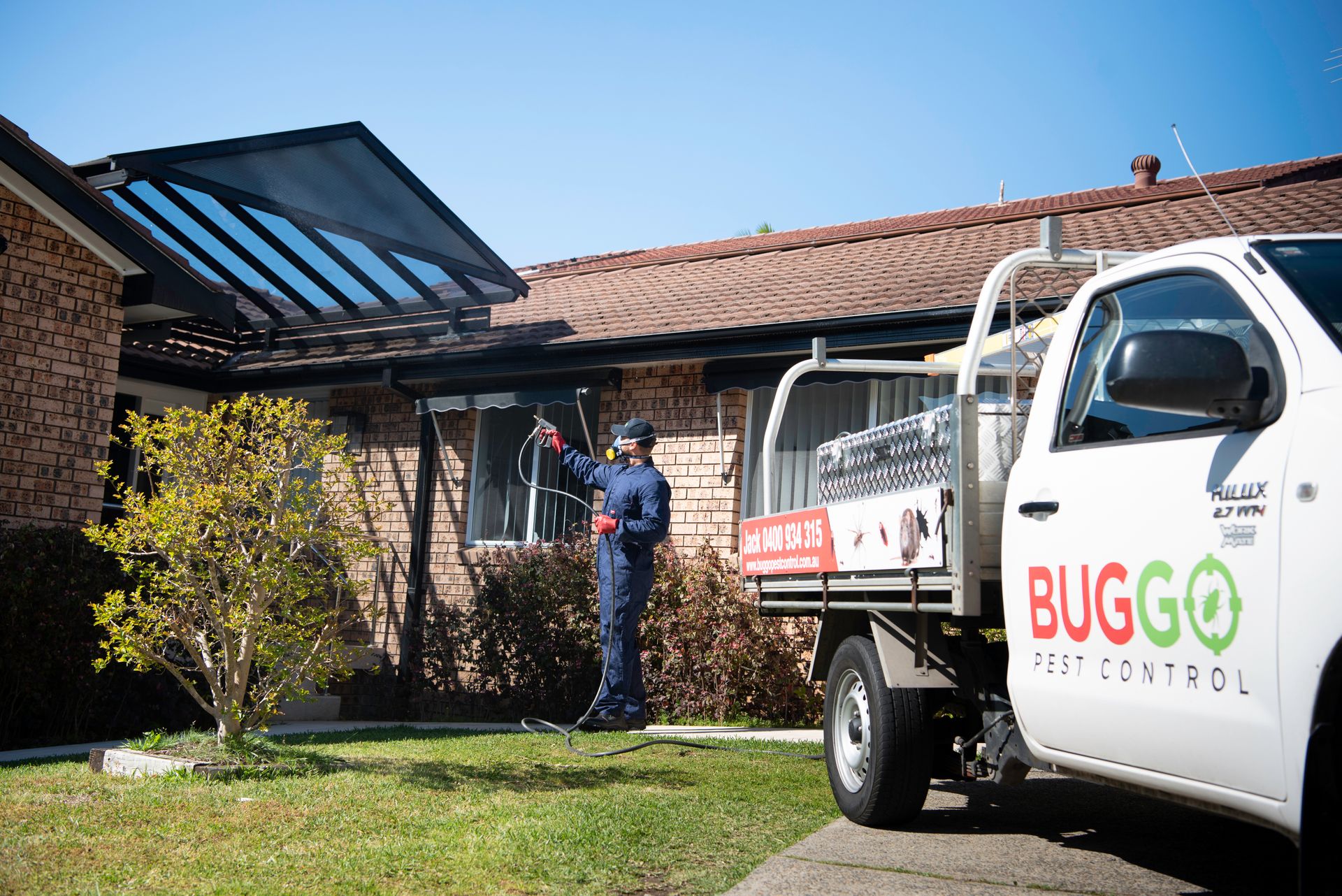
Wasp & Bee Removal Hills District
Safe nest removal. Same-day emergency service available.
Get a Free Quote
Same-day response guaranteed
Get a Free Quote
Same-day response guaranteed
Trusted Wasp & Bee Removal in Hills District
Professional wasp nest removal and bee hive relocation. Paper wasps, European wasps, and native bee management.Buggo Pest Control has been protecting Sydney homes for over 15 years. Our licensed technicians combine local knowledge with proven treatments to deliver results you can rely on.


Why You Shouldn't Ignore Wasp & Bee Removal in Hills District
The longer you wait, the worse it gets
Wasp and bee stings cause anaphylaxis in approximately 3% of the Australian population — this is a medical emergency
Paper wasps and European wasps become aggressive when their nest is disturbed, delivering multiple stings
European wasp stings are more painful and dangerous than bee stings — they can sting repeatedly unlike bees
Hills District properties near new developments are at elevated termite risk — construction disturbs established colonies that then seek new food sources in existing homes.
Wasp & Bee Removal in Hills District
The Hills District spans from suburban Castle Hill to semi-rural properties near the Hawkesbury. This urban-rural gradient means pest challenges range from typical suburban cockroach and ant problems to bushland-edge termite and snake issues. New developments in areas like Box Hill and The Ponds have created significant termite displacement.
Common Pest Issues in Hills District
Termites are a major concern — many properties adjoin or were built on former bushland or orchard land
Rodent invasions from surrounding farmland and bushland, especially in winter
Possum problems in suburbs with large trees and bushland connectivity
Ant infestations in new estates built on disturbed soil
Funnel-web spiders in properties near bushland reserves
How We Handle Wasp & Bee Removal
Professional, proven, and backed by our warranty
Species & Risk Assessment
We identify the species and assess sting risk. European wasps require different treatment than paper wasps. Native bees may qualify for live relocation.
Nest Location & Access
Many nests are hidden in wall cavities, roof spaces, or underground. We locate the full nest before treatment to ensure complete elimination.
Protective Treatment
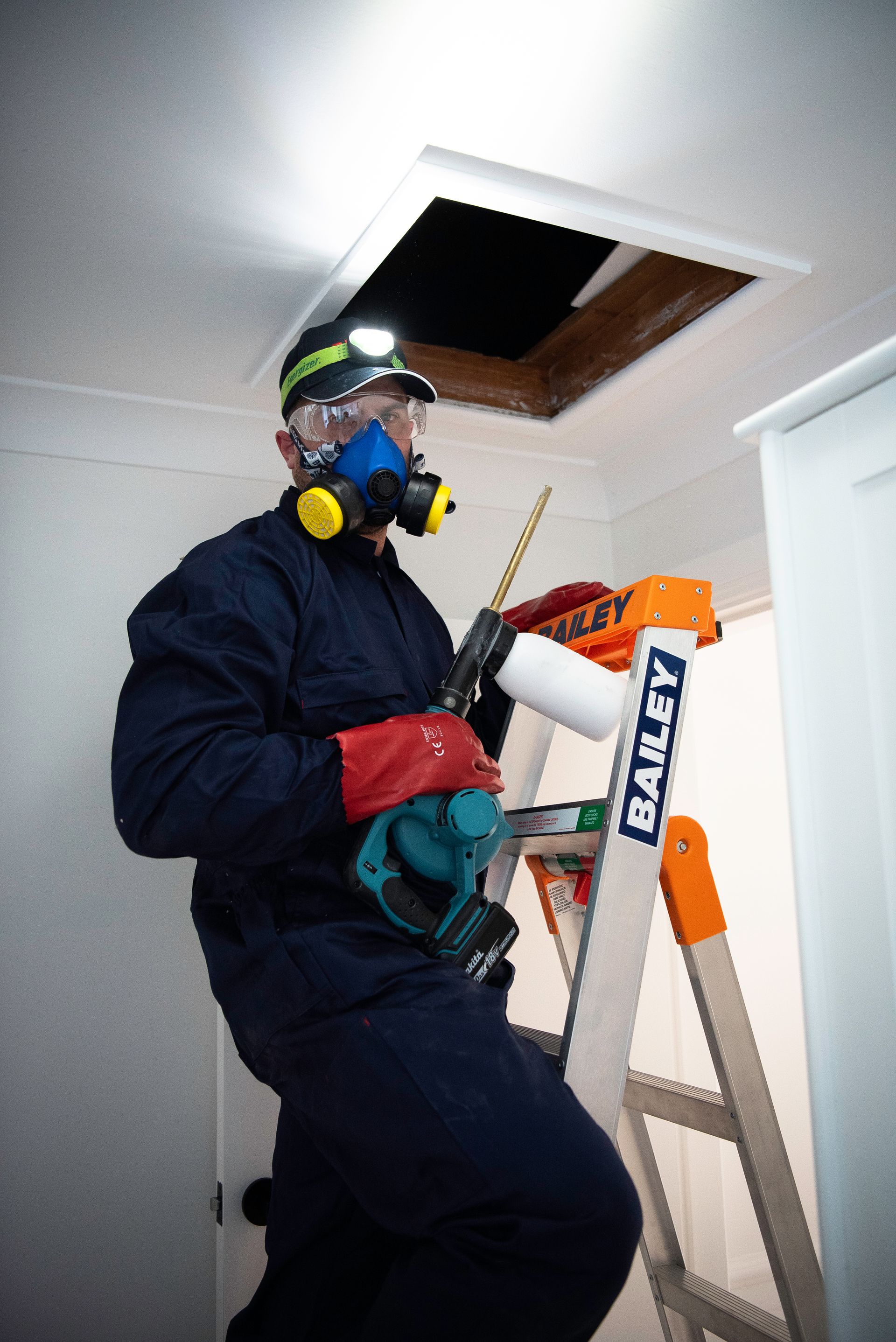
Using full protective equipment, we apply insecticidal dust or spray directly to the nest. For European wasp nests, this is done at dusk when all wasps have returned.
Nest Removal
Once the colony is eliminated, we remove accessible nests to prevent attracting new colonies. Cavity nests may be sealed in place.
Prevention Advice
We identify what attracted the colony and advise on preventing reoccurrence — sealing entry points, managing food sources, and monitoring.
Signs You Need Wasp & Bee Removal in Hills District
Watch for these warning signs around your property
Visible wasp nests under eaves, in bushes, or in wall cavities — paper wasps build open combs, European wasps build enclosed grey nests
Increased wasp activity around outdoor eating areas, bins, or sweet food sources
Bees entering and exiting a gap in walls, roof, or tree — indicating an established hive
Buzzing sounds coming from inside wall cavities or roof spaces
DIY vs Professional Treatment
DIY wasp nest removal is genuinely dangerous. Disturbing a European wasp nest can trigger hundreds of wasps to attack simultaneously. Professional removal uses protective equipment and treatments applied at optimal times to eliminate the colony safely.
When Pests Are Most Active
Wasp colonies in Sydney are founded in spring, reach peak size in late summer (February-March), and die off in autumn. European wasp nests can contain 5,000+ workers at peak. Spring is the best time for removal when colonies are small.
Pest Control Services in Hills District
Expert treatment for every pest
Cockroach Control
Targeted cockroach treatments including German cockroach gel baiting, spray treatments, and integrated pest management.
Spider Control
Comprehensive spider treatments targeting redbacks, funnel webs, huntsmen, and all common Sydney spider species.
Ant Control
Advanced ant treatments including colony baiting, perimeter barriers, and white ant (termite) inspections.
Rat & Mouse Control
Complete rodent management including trapping, baiting, entry point exclusion, and ongoing monitoring programs.
Termite Treatment & Inspection
Full termite services: thermal imaging inspections, chemical barriers (Termidor), baiting systems, and pre-purchase reports.
Bed Bug Treatment
Specialised bed bug treatments including heat treatment, chemical application, and mattress encasements.
Flea Treatment
Complete flea treatment covering indoor carpets, outdoor areas, and pet resting spots. Safe for families and pets.
Wasp & Bee Removal
Professional wasp nest removal and bee hive relocation. Paper wasps, European wasps, and native bee management.
Possum Removal
Licensed possum management including humane trapping, roof and ceiling exclusion, and entry point sealing.
Bird & Pigeon Control
Complete bird management including pigeon deterrents, bird netting, spike installation, and solar panel protection.
Mosquito Control
Mosquito treatments including barrier sprays, breeding site elimination, and ongoing yard management programs.
Silverfish Control
Targeted silverfish treatments for homes, libraries, and storage areas. Protects paper, fabrics, and stored items.
Wasp & Bee Removal FAQ — Hills District
Common questions from Hills District residents
Will you relocate bees instead of killing them?
How dangerous are European wasps?
Can wasps nest inside my walls?
What should I do if someone is stung?
Ready to Get Rid of Pests in Hills District?
100% satisfaction guarantee — if pests return within warranty, so do we. Free.